July 21, 2026
Interviewing a nanny, chef, housekeeper, or household manager in person? Here's how families can prepare and get the fit right.
How to Prepare for an In-Person Interview With a Household Candidate
You've reviewed the profiles. You've had the phone calls. Now comes the moment that so often decides everything: the in-person interview. Whether you're hiring a nanny, a newborn care specialist, a family assistant, a housekeeper, a private chef, or a household manager, this is where résumés turn into real people — where you finally get a feel for how someone will fit into the rhythm of your home and your family's daily life.
After thirty years of placing candidates in family homes, we can tell you that the families who walk away from an interview feeling confident are almost always the ones who prepared for it. Not with a rigid script, but with a clear sense of what they wanted to learn and how they wanted the conversation to feel. Here's how to set yourself up for exactly that, no matter which role you're filling.
Decide who should be there — and where
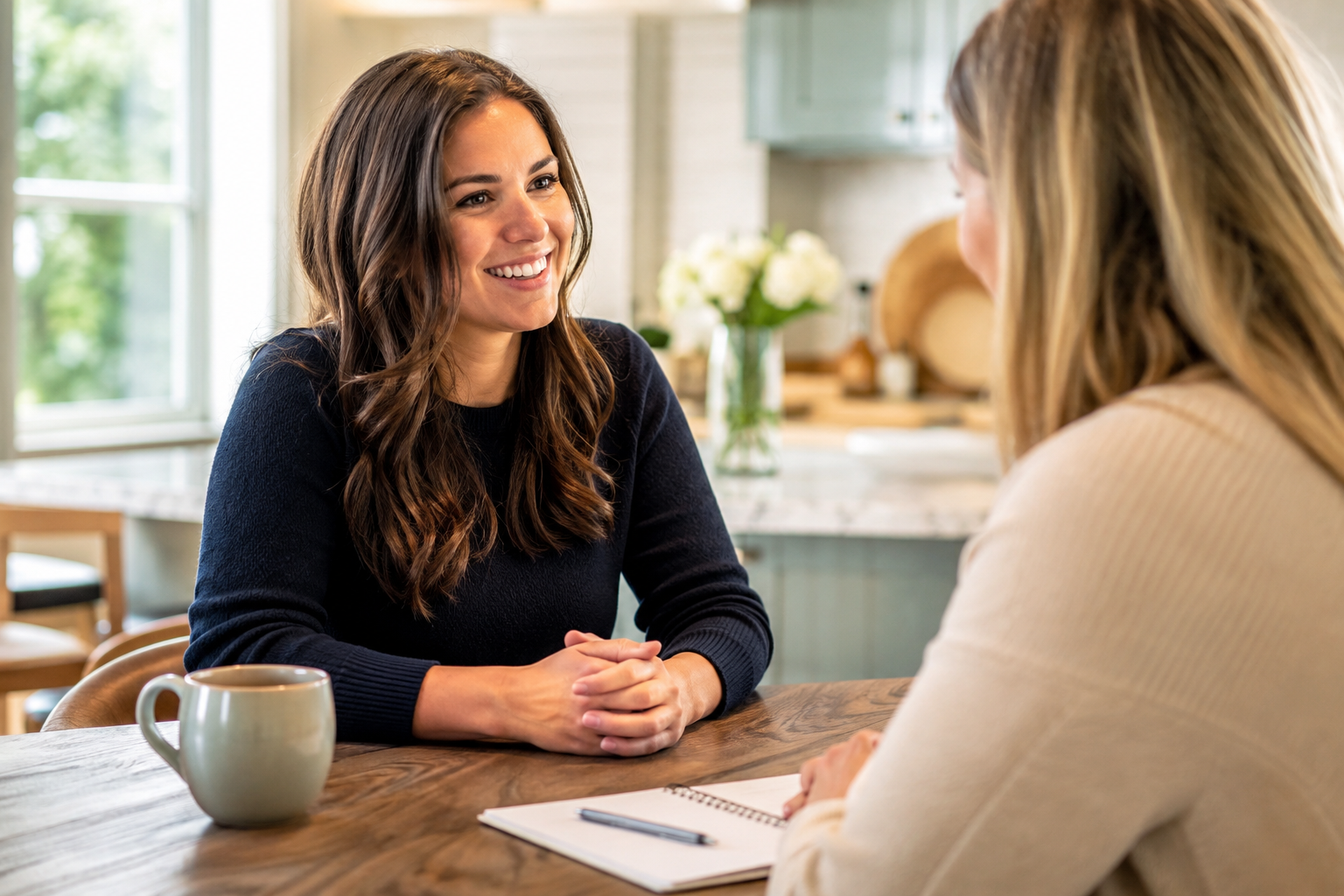
Before you settle on a time, think about the setting. An in-person interview works best in your home, where you can watch how a candidate responds to your actual space — the kitchen a chef would cook in, the rooms a housekeeper would care for, the front door a household manager would answer. A quiet living room or kitchen table beats a noisy café every time.
Decide in advance who will be present. For roles that involve your children, many families like to start with the adults so the conversation can flow, then bring the children in for the last portion. For a chef, you might plan the conversation around the kitchen. For a household manager, a walk through the home can be as revealing as any question. Match the setting to the work.
Prepare your questions ahead of time
Walking in with a handful of thoughtful questions keeps you from relying on gut feeling alone and helps you compare candidates fairly. Lean toward open-ended and scenario-based questions rather than yes-or-no ones. You learn far more from how someone answers than from the answer itself.
A few directions worth exploring, adaptable to any role:
- Experience and routine. "Walk me through a typical day or week you managed in your last position." Look for structure, initiative, and ownership.
- Their approach to the work. For a caregiver: "How do you handle a toddler's tantrum in public?" For a chef: "How do you plan menus around a family's preferences and dietary needs?" For a household manager: "How do you keep a busy household running when everything happens at once?" You're listening for their philosophy, not a perfect answer.
- Problem-solving. "Tell me about a time something went wrong on the job and what you did." Real examples reveal judgment and composure under pressure.
- Fit with your household. "What kind of home and family do you feel you thrive in?" This surfaces alignment — or mismatch — early.
Write your questions down and keep the same core set for every candidate in the same role. It makes your later comparisons far more honest.
Pay attention to what isn't said
Some of the most useful information in an interview never comes through words. Notice how a candidate carries themselves in your space — whether they're observant, respectful, and genuinely curious about your household. Watch a chef's attention to detail, a housekeeper's eye for a room, a caregiver's warmth, a manager's instinct for how a home actually flows.
Curiosity is a wonderful sign. Candidates who ask thoughtful questions of their own are usually the ones who are genuinely invested rather than simply looking for a job. Punctuality, presentation, and how they treat everyone in the room — not just the decision-maker — all tell a quiet story too.
For childcare roles, watch the interaction
If the position involves your children, the most telling part of the interview is often the simplest: how the candidate actually is with your kids. When it's time to include them, resist the urge to manage every second. Let the candidate engage on their own — a moment reading a book with your toddler, a chat with your older child about school. What you're looking for is ease, the natural back-and-forth that can't be faked. Your children's reactions, especially the little ones', are often more honest than anything an adult will say.
Leave the details to us
Here's something that takes real pressure off your shoulders: you don't need to raise the subject of compensation, benefits, or terms during the interview. That's our job, and we handle all of it on your behalf.
This matters more than families sometimes realize. When those conversations happen directly between a family and a candidate, they can get awkward fast, and they can color an otherwise wonderful interview. By letting us manage every part of the negotiation, you keep your interview focused entirely on what you're actually there to assess: connection, character, competence, and fit. You get to be the warm host getting to know a potential hire, not the person across the negotiating table. If a candidate raises it, you can simply and graciously say the agency handles all of that — and get right back to the good stuff.
Take notes right after
Memory fades fast, especially when you're meeting several candidates in a short window. As soon as the interview ends, jot down your impressions while they're fresh: what stood out, what gave you pause, how the space and the conversation felt. A few honest lines now will make your final decision far clearer later.
We're with you the whole way
An in-person interview can feel like a lot to carry, particularly when you're inviting someone into the most personal parts of your life and home. You don't have to carry it alone. We're here to help you prepare your questions, think through your priorities, and handle every detail that follows — so you can focus on the one thing only you can judge: whether this is the right person for your family.
When you're ready to meet your next candidate, reach out to our team and we'll guide you through every step.