August 18, 2026
From nannies to housekeepers to private chefs, professional attire matters in a private home. A practical guide to dressing for any domestic staff role.
How to Dress as a Nanny or Household Professional
In a private home, how you present yourself is part of the job. Long before a family sees your resume in action, they notice how you show up at the door — and the right attire signals that you're organized, capable, and ready to work. Dressing well as a domestic professional isn't about being fashionable. It's about being appropriate, practical, and polished in a way that fits the household you serve.
Whether you're a nanny, a housekeeper, a private chef, or a household manager, the same principle holds: your clothing should let you do your job well while showing the family you take it seriously. Here's how to dress for any domestic staff role, from your first interview to your everyday routine.
The principles that apply to every domestic role
Before we get into specific positions, a few rules hold true across the board.
Neat and clean beats trendy. Clothes that are pressed, well-fitted, and free of stains or wear will always read as more professional than the latest style. In someone's home, tidiness is a form of respect.
Dress for the work, not the runway. Every domestic role involves movement — bending, lifting, reaching, being on your feet. Your clothing has to keep up. Restrictive, fussy, or delicate pieces get in the way and rarely survive a real workday.
When in doubt, dress up, then adjust. For interviews and first days, lean slightly more polished than you think you need to. It's far easier to relax your look once you understand a household's culture than to recover from showing up too casual.
Read the household. A relaxed family in a suburban home and a formal estate with a full staff have very different expectations. Part of professionalism is noticing which one you're in and matching it.
Modest and understated is the safe default. Avoid anything low-cut, sheer, overly tight, or heavily logo'd. Keep jewelry minimal, perfume light or absent, and nails clean and practical.
What to wear as a nanny or newborn care specialist
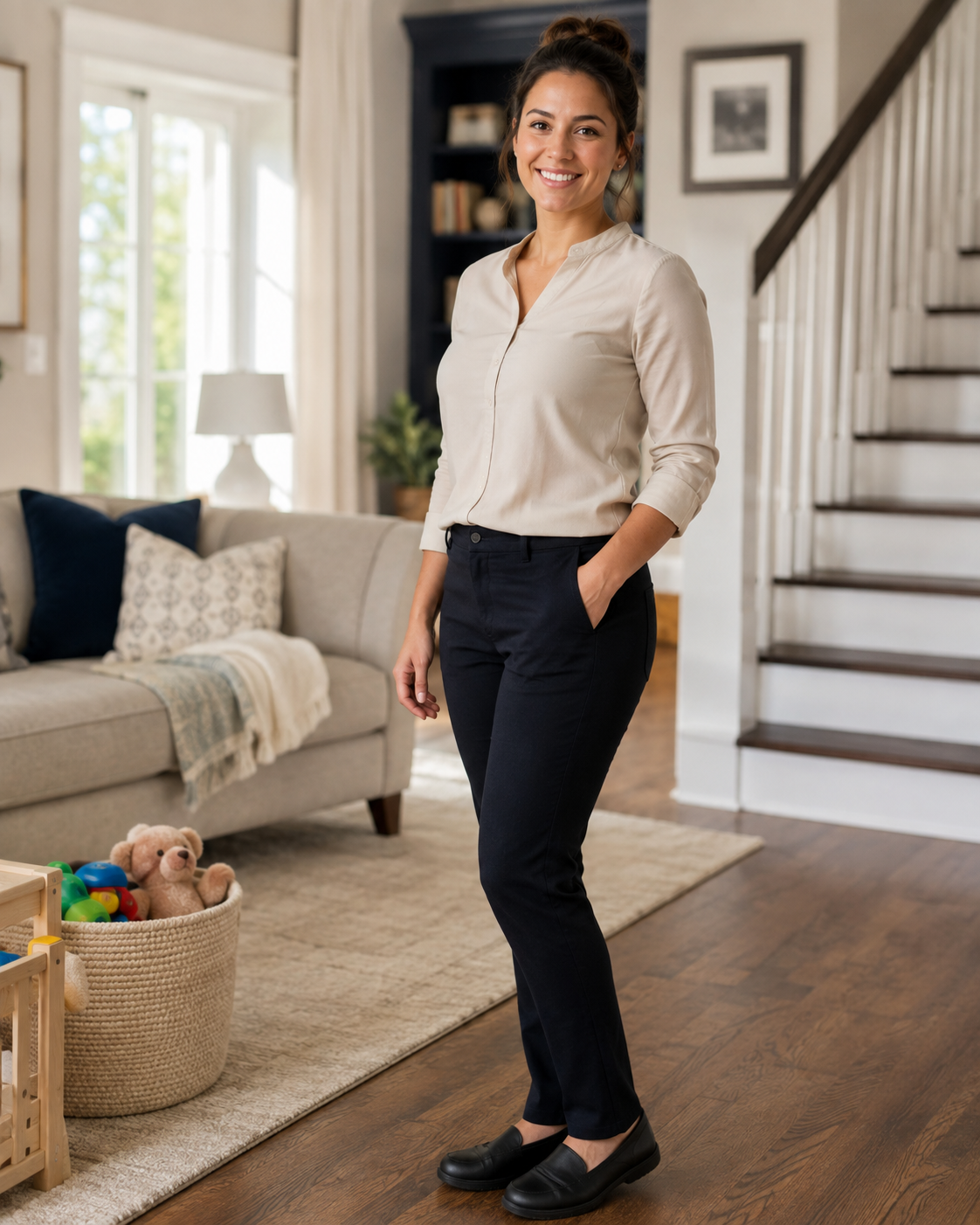
Childcare is physical, messy, and constant, so a nanny's wardrobe has to be built for real life. Think clean, comfortable, washable clothing you can move in: well-fitted tops, stretch or relaxed pants, and layers you can add or shed as you chase kids from the backyard to the bath.
Footwear matters more than almost anything. Closed-toe, supportive, non-slip shoes keep you safe and quick on your feet — this is not the job for heels or flimsy sandals. Skip long necklaces, dangling earrings, and rings with sharp settings that can scratch a baby or get grabbed by little hands. For newborn care specialists working closely with infants, keep nails short and smooth, fragrances off, and clothing soft and snag-free.
For interviews, a nanny can dress a notch up — clean slacks or dark jeans with a neat blouse or sweater — signaling professionalism without pretending the job won't involve finger paint.
What to wear as a housekeeper
Housekeeping is demanding, hands-on work, and your clothing needs to be durable and easy to move in. Breathable, washable fabrics that handle cleaning products and hold up to repeated laundering are ideal. Many housekeepers wear a simple uniform or a consistent set of neutral, practical pieces, sometimes with an apron to protect clothing and carry supplies.
Closed-toe, non-slip shoes are essential on wet or freshly cleaned floors. Keep sleeves manageable, tie back long hair, and avoid loose or dangling items that can catch on furniture or fixtures. The goal is to look tidy and professional while being fully equipped to do physical work.
What to wear as a private chef, personal chef, or cook
In the kitchen, attire is about safety and hygiene as much as appearance. Whether you wear traditional chef whites or a neat, professional alternative, your clothing should be clean, close-fitting enough to stay clear of flames and equipment, and made from fabrics that handle heat and washing.
Closed-toe, non-slip shoes are non-negotiable around hot surfaces and spills. Hair must be tied back or covered, jewelry kept to a minimum, and nails short, clean, and unpolished for food safety. An apron protects your clothes and keeps you presentable if you're plating for guests. A chef who looks clean and controlled reassures a family that their food is in careful hands.
What to wear as a household manager or family assistant
These roles are the most client-facing and often the most polished. Household managers and family assistants interact with the family, greet guests, coordinate vendors, and sometimes represent the household in public — so business-casual attire is usually the right register. Think tailored slacks or a skirt, a crisp blouse or button-down, a blazer when the setting calls for it, and clean, professional shoes.
Because these positions blend office-style coordination with hands-on household support, aim for polished but practical: put-together enough to meet a contractor or run an errand at an upscale shop, comfortable enough to handle a busy, unpredictable day.
What to wear for overnight roles
Overnight nannies and sleep-in staff have a particular balance to strike. You want to be comfortable enough for a long night on duty, yet professional and appropriately covered — you are working, not at home. Clean, modest loungewear-adjacent pieces that you'd be comfortable being seen in by the family at 2 a.m. are the right call. Keep a fresh, presentable change ready for the morning handoff.
Grooming and the details that finish the look
Attire is only half of presentation. Clean, styled hair, fresh breath, trimmed nails, and light or no fragrance round out a professional appearance. In close-contact roles especially, families notice hygiene, and getting it right builds quiet, lasting trust.
When in doubt, ask
Every household has its own culture and expectations, and the best professionals simply ask. A quick conversation with the family — or with your agency before day one — about dress code and household norms shows initiative and saves you from guessing. Presenting yourself well is one of the easiest ways to make a strong, lasting impression, whatever domestic role you fill.
At Nanny Poppins Agency, we help qualified candidates put their best foot forward and match with the families who value that professionalism. If you're a family seeking polished, thoroughly vetted household staff, contact Nanny Poppins Agency to start the conversation.